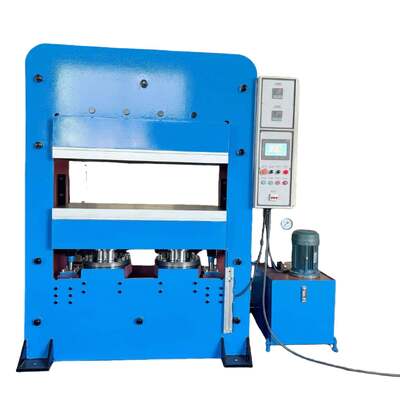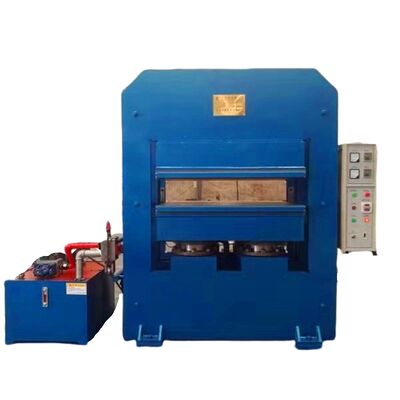
| Tên thương hiệu: | Beishun |
| Số mẫu: | XPL-1000×1000/4.0MN |
| MOQ: | 1 bộ |
| giá bán: | Có thể đàm phán |
| Điều khoản thanh toán: | T/T, L/C |
| Khả năng cung cấp: | 20Sets/tháng |
It is described a very capable and heavy-duty piece of equipment. Let's break down what this specification means and its typical applications.
Worktable/Platen Size: 1000mm x 1000mm (1m x 1m)
This is a large work area, allowing you to process sizable sheets, multiple smaller parts in a single cycle, or large molds. The square shape is versatile for various applications.
Frame Structure:
This indicates a robust, C-frame or H-frame (four-column) construction made of heavy steel plates. A four-column (H-frame) structure is most common for this size and tonnage, offering exceptional stability, minimal deflection under full load, and excellent parallelism between platens. This is crucial for producing consistent, high-quality parts.
"Flat" Vulcanizing Press:
This is a hot press. The platens are heated (usually by electric cartridge heaters, steam, or thermal oil) to cure, bond, or form thermoset materials.
"Vulcanizing" specifically refers to the process of curing rubber—cross-linking polymer chains using heat and pressure to transform soft, tacky rubber into a durable, elastic material.
"Flat" emphasizes its primary use for sheet materials, molded sheets, or laminates, as opposed to a press for tires or other contoured shapes.
400-ton Hydraulic System:
This is the heart of the machine. "400-ton" (≈ 3,500 kN) refers to the maximum force the press can exert.
At 1000x1000mm, this provides a theoretical platen pressure of 40 kg/cm² (or ~560 PSI). (Calculation: 400,000 kg / (100 cm * 100 cm) = 40 kg/cm²).
This high pressure is necessary to:
Force material into intricate mold details.
Expel air and volatiles during curing.
Achieve proper density and bonding in laminates.
Compress materials to a specific thickness.
This machine is a workhorse in industries that process elastomers and composites:
Rubber Manufacturing: Producing rubber sheets, gaskets, seals, mats, conveyor belt splices, and rubber-lined parts.
Composite & Laminate Production: Bonding layers of materials like fiberglass, carbon fiber, plastics, and wood (e.g., plywood, door skins).
Plastic & PCB Lamination: Used for laminating printed circuit boards (PCBs) and decorative laminates.
Silicone Product Curing: Making silicone sheets, keypads, and industrial components.
Technical Textiles: Bonding non-wovens or foam fabrics.
Research & Development: For material testing and prototyping under high heat and pressure.
Heated Platens: Often made of high-grade, drilled tool steel for even heat distribution. Temperature range typically up to 300°C or higher.
Hydraulic Power Unit (HPU): Includes a high-flow pump, electric motor, oil reservoir, coolers, and valves to generate the 400-ton force.
Precision Control System: A PLC (Programmable Logic Controller) and touchscreen HMI to set and control:
Process Parameters: Temperature, pressure, and cure time.
Press Cycle: Close, press, hold, decompress, open.
Often includes multi-stage programming for complex recipes.
Safety Features:
Light Curtains or Safety Gates: To prevent access while the press is closing.
Pressure Relief Valves: To prevent over-pressurization.
Mechanical Locks/Safety Props: For maintenance (LOCKOUT/TAGOUT).
Hydraulic Ejection System (Optional): To help remove molded parts from deep molds.
Water Cooling Channels (Optional): For rapid cooling after cure (improves cycle time).
Tooling/Molds: You will need custom-designed molds or caul plates sized for the 1m x 1m platen.
Power Requirements: Significant electrical power is needed for the heaters (can be 30-60 kW or more) and the large hydraulic motor.
Floor Space & Foundation: This is a heavy machine (weighing many tons). A solid, level concrete foundation is mandatory.
Cycle Time: Heating and cooling a platen this size takes time. Cycle efficiency depends on your material's required cure temperature and time.
Parallelism Control: For such a large area, ensuring the platens remain perfectly parallel under full load is critical. Look for features like precision guide rods/bushes or even proportional hydraulic valves for auto-leveling.
You are looking at a large-format, high-tonnage, industrial hot press designed for high-volume or large-part production of vulcanized rubber, composites, and laminated materials. Its 1m² work area and 400-ton force make it suitable for demanding industrial applications where consistent high pressure and temperature over a large surface are required.
![]()